

Every successful game economy is built on a simple truth: it needs players who spend money. In the age of free-to-play, the gaming industry remains hyper-fixated on raw player counts, but for most games, that metric is a vanity. The only number that keeps the lights on is revenue.
Over the last 15 years, the internet has become ruthlessly efficient. The abundance of data and sophisticated user tracking have fundamentally changed how developers build games.
The goal has shifted from maximizing fun to maximizing the user's propensity to spend.
Our niche hobby, once the domain of nerds and neckbeards, has morphed into one of the most profitable industries on the planet, fueled by the sale of non-transferable digital goods with near-infinite margins. It's a business model rivaled only by the tech giants who own the very servers these games run on. No matter how captivating your game is, it's tough to beat the blokes selling picks and shovels.
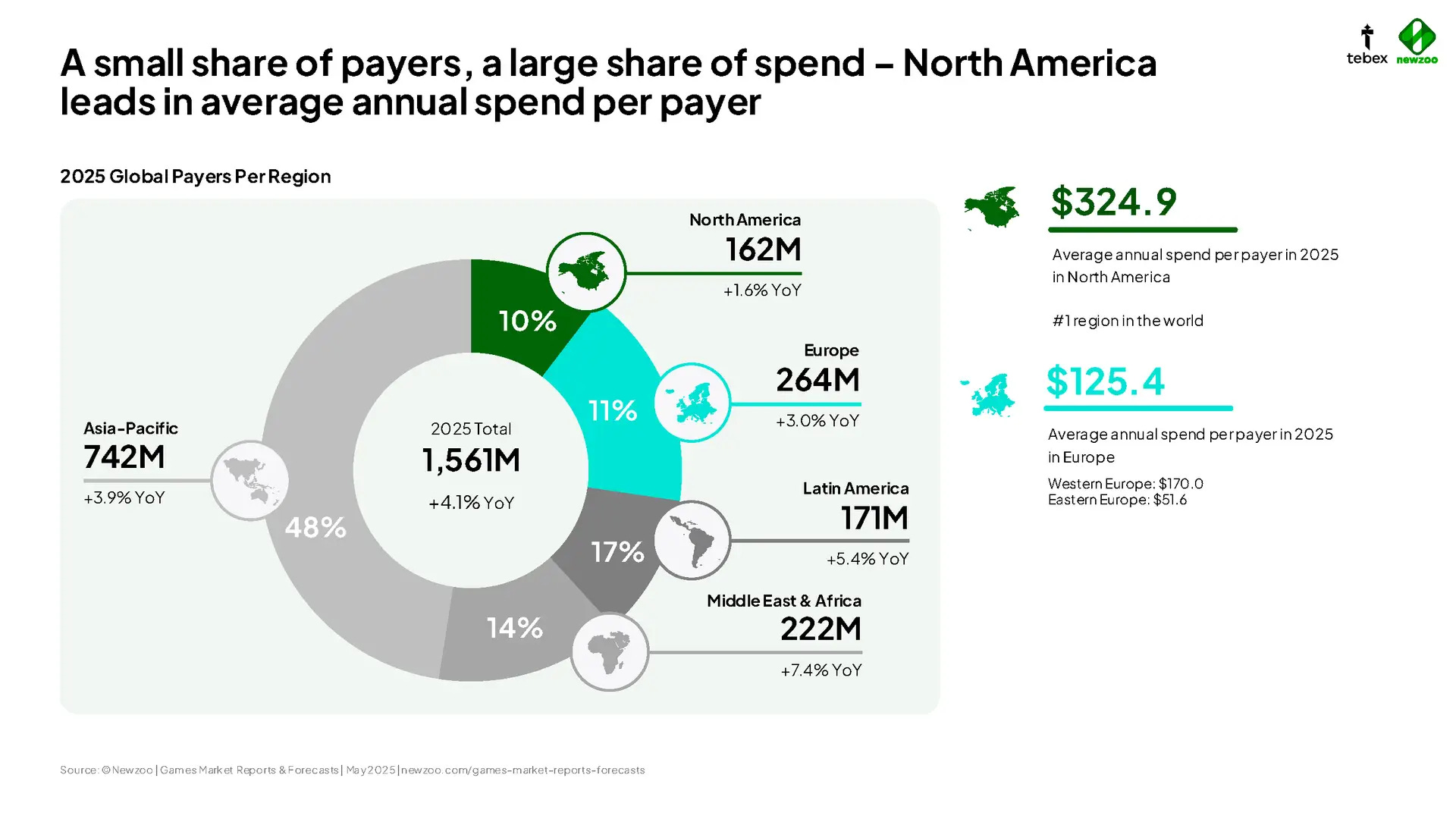
And modern game studios are doing far more than just well. In North America alone, over 160 million gamers spend an average of $324.90 per year.
The real question is: Why?
What psychological drivers compel us to open our wallets for digital items?
The answer boils down to seven core motivators. They are the pillars that support every sustainable game economy, mastered by today's hyper-profitable mobile games and still strangely neglected by many game designers in the blockchain space.
Successful game developers must embrace these silent forces, or risk their virtual worlds becoming ghost towns.
1. Fun
The desire for pleasure.
At its heart, gaming is escapism. We pay for the adrenaline rush, the thrill of discovery, and the pure, unadulterated joy of immersing ourselves in a fantastical world. Whether it's a new expansion that offers novel challenges or a cosmetic item that deepens our immersion, gamers buy experiences that stimulate their senses and offer a respite from the mundane. The pursuit of fun is innate.
We gladly pay for gateways to heightened sensation.
2. Community
The desire for connection.
We are tribal creatures, hardwired to seek belonging. In an era where the World Health Organization has officially recognized loneliness as a global epidemic, online games have become modern-day campfires.
The idea of gaming as a ‘friendship machine’ is why a game like EVE Online has thrived for over two decades. Its sandbox of cooperation and betrayal is a pressure cooker for forging loyal, dedicated communities. Players buy guild banners, shared housing, and gifts for friends because they are investing in relationships.
Gamers value gateways to lasting connections.
3. Revenge
The desire for justice.
Virtual worlds have discrete rules, which is often why we find them more compelling than the real one. And the desire for equity burns hot. Players are sensitive to that perceived fairness being disrupted, whether it be through unsanctioned PvP or simple strategic betrayal.
Affected players will invest time, effort, and, crucially, money to gain an edge. They’ll buy power-ups, better gear, or resources to ensure that the next time they meet their rival, the scales will be balanced.
Gamers value tools to bring justice to their enemies.
4. Prestige
The desire for fame.
Identity is performance. Gamers, like everyone else, want to showcase their skills, dedication, and status. Limited items, high-level gear, and rare drops all play a role in allowing players to flex their dedication.
This is the essence of competition. Think of leaderboard rankings or exclusive titles that recognize exceptional performance. These are key vehicles for players to express their identities and signal membership to the club. The top of every leaderboard is an exclusive club. There can only be one winner, and true competitors will pay for any possible edge to be that winner.
Gamers value being recognized.
5. Chance
The desire for fortune.
The allure of the jackpot is a powerful motivator. We are wired to chase disproportionate rewards, often convincing ourselves that a big win is "due." This psychology is why loot boxes and gacha mechanics are not just tolerated but, in many markets, demanded.
Players in Asia will openly criticize developers for not including randomized crates with a chance for rare drops. They want the rush, the shot at hitting a digital lottery more than they expect a positive financial return.
Gamers value a chance to get ahead, even when the odds are stacked against them.
6. Freedom
The desire for contraband.
There is an undeniable thrill in breaking the rules. We are drawn to the forbidden, placing extra value on things that aren't ordinarily accessible. And gaming is rich with opportunities to break the rules.
While this can manifest as mods or unofficial content, it also drives economies. Players will pay for access to hidden areas, buy items from grey markets, or purchase tools that allow them to customize their experience beyond intended parameters. It’s the same impulse that makes Grand Theft Auto a cultural phenomenon.
Gamers value the power to push boundaries.
7. Survival
The desire for viability.
Beneath every other motivator lies the fundamental need to endure. As the lines between virtual and real economies dissolve, digital survival has gained tangible weight. The more time and resources players invest in a character, the more they’ll pay to protect that investment.
This has evolved beyond simple persistence into what can only be called digital subsistence. Look at the Axie Infinity scholars of 2021. They weren't just playing; they were participating in a new form of digital colonialism, farming resources for players in wealthier nations. They endured mind-numbing repetition and continued purchasing in-game assets because the game offered something their local economy couldn't: a viable income. A means of survival.
Gamers value a means to secure their digital livelihood.
Blockchain Games, Take Heed
Every timeless game economy understands these motivators. Think of EVE Online, RuneScape, Path of Exile, or World of Warcraft. They don’t just offer one; they layer these drivers together, letting them intersect and amplify one another. A purchase driven by Fun unlocks an item that grants Prestige, which in turn helps your guild achieve its Community goals. This is the alchemy that turns a single transaction into lasting player loyalty—the kind of engagement that makes investors weak at the knees.
For blockchain games, often promising fairer ecosystems and increased transparency, internalizing these principles is paramount. This is especially true for projects that raised funds by selling tokens or NFTs but still haven't found sustainable revenue.
The fatal flaw is building the tech first and trying to tack on the psychology later. You must embed these motivators into your game's core loops from day one. This signals your values and attracts the right kind of players. No game can be all seven things to all people; the art is in finding the right cocktail for your audience. This is why centralized gambling platforms, despite being measurably worse for users, often thrive while blockchain "equivalents" fail. The former understands raw human desire; the latter is too often in love with its own tech.
Ultimately, your economy's success depends on your ability to answer a simple question for every single item you sell:
"Why would a player buy this?"
If you can't tie the answer back to one of these seven motivators, you don't have a feature. You have a liability.